Does Turmeric Soap Really Work for Anti-Aging? What Science Says About Nature’s Antioxidant
I used to think good skincare meant expensive skincare. I spent years cycling through anti-aging serums, retinols, and vitamin C derivatives — each one promising to turn back the clock. Some helped. Most didn’t. And the ones that did? They came with a list of ingredients I couldn’t pronounce and a price tag that made me wince.
It wasn’t until I started making soap in my mountain studio in Yunnan that I discovered something surprising: one of the most scientifically-validated anti-aging ingredients in the world is also one of the oldest. It grows in the ground. And it costs a fraction of what I used to spend on a single serum.
It’s turmeric.
What Gives Turmeric Its Anti-Aging Power for Skin?
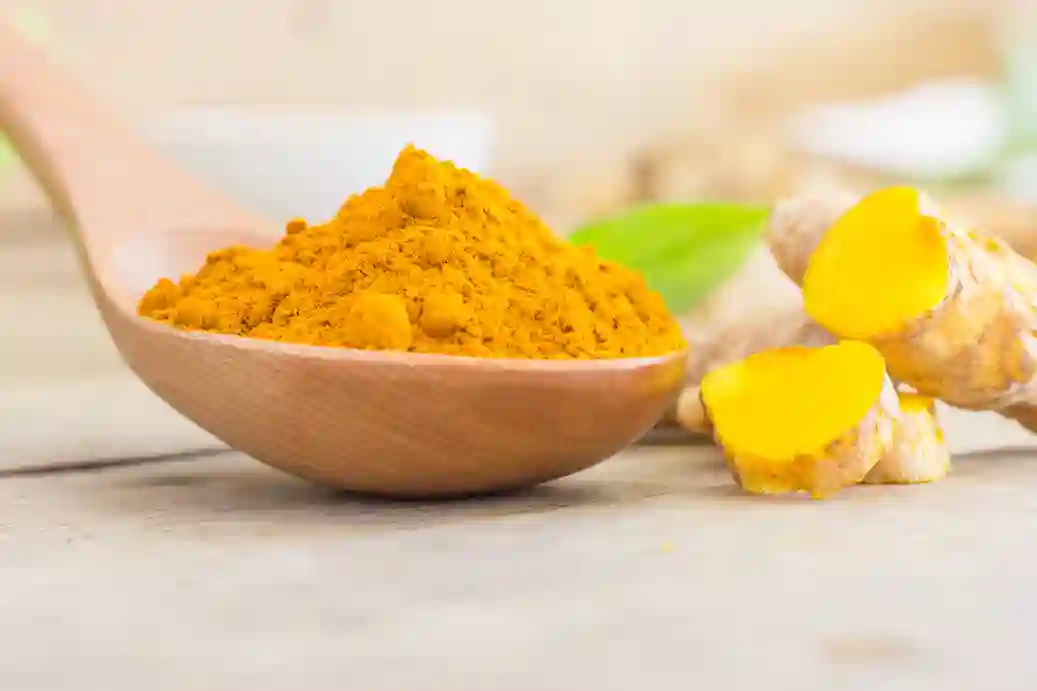
The active compound in turmeric is called curcumin. It’s what gives turmeric its golden color, and it’s also what makes it one of the most studied botanical ingredients in modern skincare research.
Curcumin is a polyphenol — a class of compounds known for their antioxidant properties. When applied to the skin, it works on two levels:
- It neutralizes free radicals. Free radicals are unstable molecules that damage skin cells, break down collagen, and accelerate visible aging. Curcumin’s molecular structure allows it to “donate” an electron to stabilize these free radicals without becoming unstable itself — effectively stopping the chain reaction of oxidative damage before it starts.
- It reduces inflammation at the cellular level. Chronic low-grade inflammation (sometimes called “inflammaging”) is now understood to be a major driver of premature skin aging. Curcumin inhibits the NF-κB pathway — a protein complex that controls inflammation — which means fewer inflammatory responses in your skin cells.
This dual action — antioxidant + anti-inflammatory — is relatively rare in a single natural compound. Most botanical ingredients do one or the other. Curcumin does both.
Does Turmeric Soap Really Help with Anti-Aging? What the Research Says
The science on curcumin’s effects on skin has grown significantly in recent years. Here’s what peer-reviewed studies have found:
1. Can Curcumin Protect Your Skin from Oxidative Stress?
A 2019 study published in the Journal of Cosmetic Dermatology found that topical application of curcumin significantly reduced markers of oxidative stress in skin cells exposed to UV radiation — one of the primary causes of premature aging. The study noted that curcumin’s antioxidant capacity was comparable to that of vitamin C and vitamin E, with the advantage of being naturally anti-inflammatory.
2. Does Turmeric Help Preserve Collagen and Prevent Wrinkles?
Research published in Frontiers in Pharmacology demonstrated that curcumin can help protect collagen fibers from degradation caused by UV exposure and environmental pollutants. The study found that curcumin directly inhibits MMP enzymes (the proteins that break down collagen) while simultaneously promoting new collagen synthesis through the TGF-β signaling pathway. Collagen is the structural protein that keeps skin firm and elastic — and its breakdown is one of the hallmarks of visible aging.
3. Is Turmeric Effective for Skin Repair and Healing?
A clinical trial published in Phytotherapy Research found that curcumin intake significantly improved total antioxidant capacity and reduced inflammation in patients with skin wounds — supporting the ingredient’s role in the body’s natural repair processes. While wound healing is distinct from general skincare, the mechanisms involved — cell regeneration and reduced inflammation — are directly relevant to how skin repairs itself from daily environmental damage.
“Curcumin’s antioxidant capacity is comparable to that of vitamin C and vitamin E, with the added advantage of being naturally anti-inflammatory.”
Is Cold-Process Soap the Best Way to Use Turmeric for Skin?
Here’s the thing about curcumin: it’s fat-soluble, not water-soluble. That means it needs to be carried in oil or fat to be effectively absorbed by your skin. This is why simply making a turmeric paste with water and applying it to your face isn’t the most effective approach — the curcumin can’t penetrate deeply enough.
Cold-process soap making, on the other hand, naturally creates a medium that carries curcumin effectively. The saponification process — where oils and fats are transformed into soap — preserves the molecular structure of curcumin while embedding it in a format that can be delivered directly to your skin.
There’s another advantage too: temperature control. Curcumin begins to degrade at high temperatures. Cold-process soap making never exceeds temperatures that would damage the active compounds — unlike hot-process soap or commercial manufacturing methods that use heat to speed up production.
What Can Turmeric Soap Do — and What Can’t It Do?
I want to be honest with you, because I believe that’s what thoughtful skincare deserves.
Turmeric soap will not erase deep wrinkles overnight. It won’t replace medical treatments for serious skin conditions. And if you’re expecting the dramatic results of a chemical peel or prescription retinol, a bar of soap — no matter how well-made — isn’t that.
What it can do, over consistent use, is support your skin’s natural ability to protect itself from oxidative damage, reduce the low-level inflammation that accumulates over time, and provide a gentle, non-stripping cleanse that doesn’t disrupt your skin barrier the way many commercial anti-aging cleansers do.
Think of it as the foundation of your skincare routine, not the entire house. Cleanse with something that supports your skin rather than stripping it, then layer your targeted treatments on top.
Where Our Turmeric Comes From
The turmeric I use comes from Guangxi, a region in southern China known for its high-quality turmeric — richer in curcumin content than turmeric from many other growing regions. The rhizomes are harvested, dried, and ground locally before being incorporated into our cold-process soap.
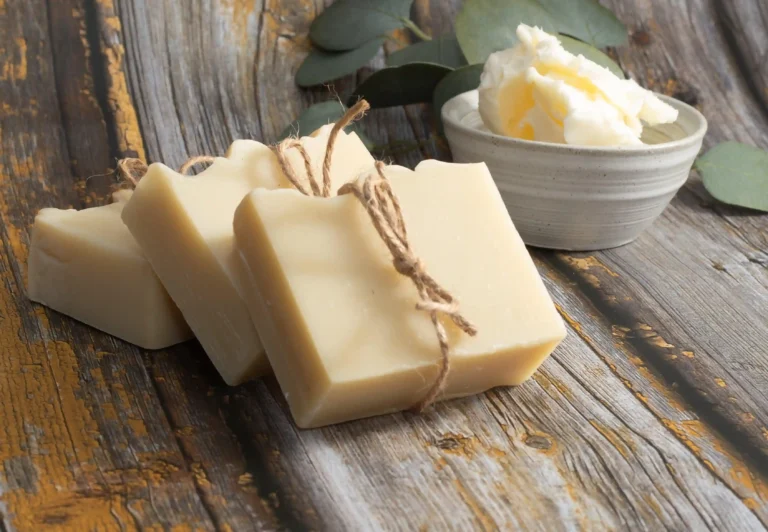
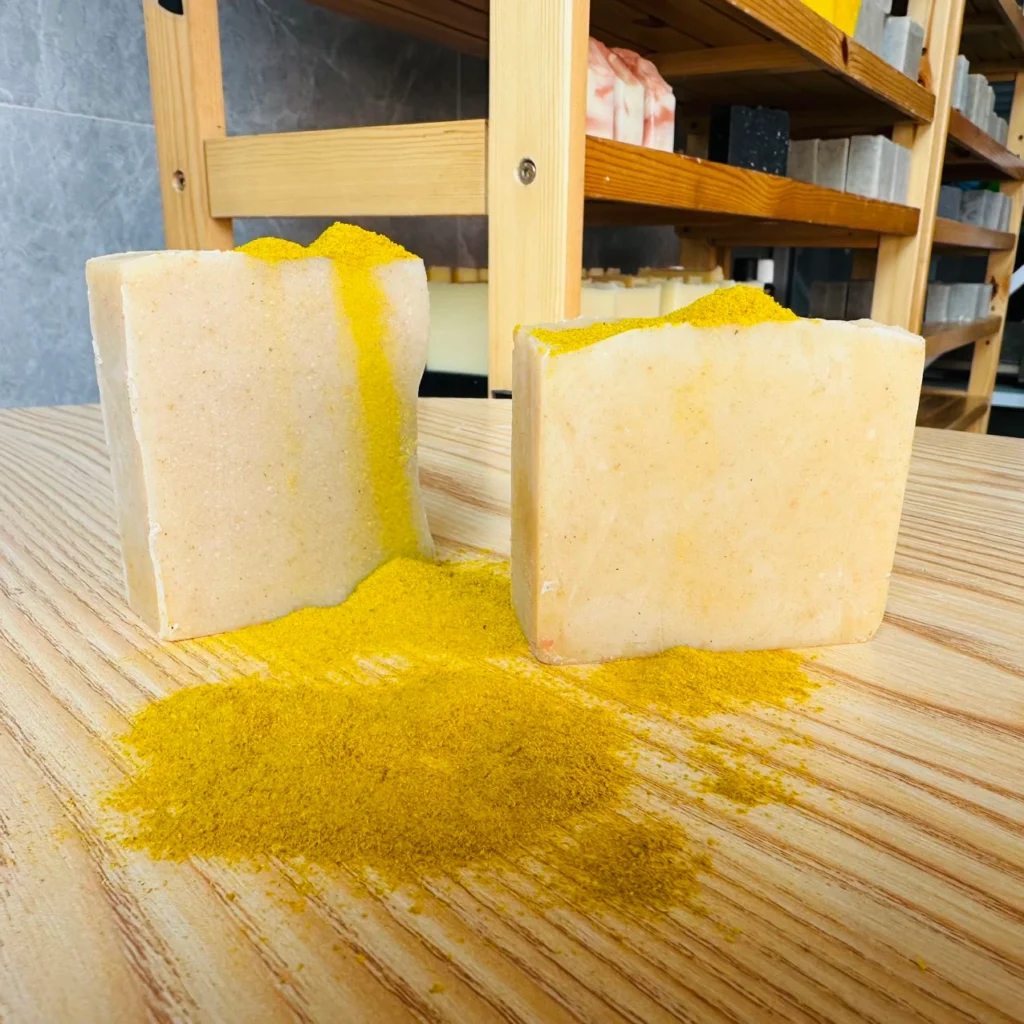
- Made with Guangxi turmeric. Our Natural Turmeric Soap is made using traditional cold-process methods, with no artificial fragrances, no synthetic dyes, and nothing that doesn’t belong on your skin. The golden color comes entirely from turmeric — not from coloring agents.
The result is a bar that’s gentle enough for daily facial use, grounded in both traditional knowledge and modern science, and made by hand in small batches — because that’s the only way to do it right.
Is Turmeric Soap Worth Adding to Your Anti-Aging Routine?
Turmeric is one of the most researched botanical ingredients in skincare for a reason. Its antioxidant and anti-inflammatory properties are well-documented, and when delivered in the right format — like cold-process soap — it can be a genuinely useful part of an anti-skincare routine.
It won’t replace a healthy diet, good sleep, and sun protection. But it doesn’t have to. Good skincare isn’t about finding one miracle ingredient. It’s about building a routine of small, consistent choices — and choosing to wash your face with something that’s working with your skin, not against it.
If you’re curious about whether natural soap might work for your skincare routine, turmeric soap is a great place to start.